


Emergency Survival Kits
DIY vs. Ready-Made Earthquake Kits: How to Choose
Build your own earthquake kit or start with a packed backpack? Compare the work, costs and personal supplies involved before choosing.
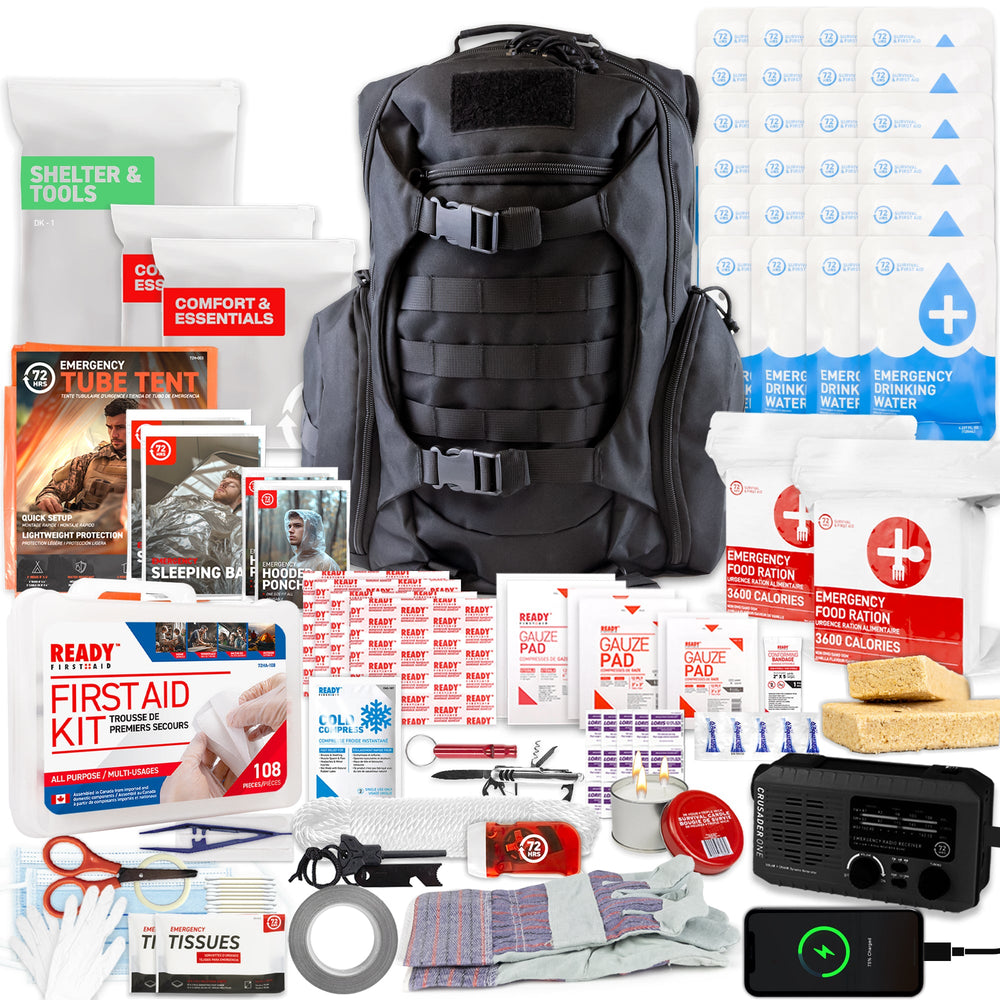
A DIY earthquake kit lets you choose every item. A ready-made earthquake kit gives you a packed starting point that you can inspect and personalize. The better choice depends on what you already own, how much time you can spend assembling supplies, and whether the finished kit fits your household.
Compare the same needs on both sides. A low initial price means little if essential items, replacement supplies or a usable carrying bag are missing. A prepacked kit also needs personal additions; buying a backpack does not finish your emergency plan.
What are you actually comparing?
Start with a written list of people, locations and supplies. Identify whether this purchase is for a portable bag, supplies kept at home, or both. These serve different packing needs: a bag must be manageable to carry, while a home supply can include heavier items stored separately.
The Ready.gov emergency supply checklist is a starting point for basic categories and household additions. Use it to review coverage rather than judging a kit by the number of pieces advertised.
DIY and ready-made: a practical comparison
| Decision | DIY kit | Ready-made kit |
|---|---|---|
| Assembly | You choose, buy and pack each item. | You unpack, check the contents and add personal items. |
| Budget | Reuse suitable supplies you own; total every missing purchase. | Compare the listed contents with what you still need to buy. |
| Fit | You control the bag and organization from the beginning. | Check space, compartments and carrying comfort after adding your items. |
| Maintenance | Record each item's storage instructions and replacement date. | Review individual labels; one advertised shelf life may not cover every component. |
| Personal needs | Build these into your original list. | Add them after reviewing what is included. |
How to compare costs fairly
Make two shopping lists using identical categories. Include the carrying container, any organizers, missing supplies and the items you will need immediately after purchase. Mark supplies you already own separately so you do not buy them twice.
For a DIY option, include the time required to check compatibility and pack the bag. For a ready-made option, allow time to unpack and learn where things are. Neither approach removes the need to understand your equipment.
If a product advertises a person count, read the quantities underneath it. Check which supplies are shared, which are supplied per person, and which needs are outside the package. Compare food suitability, battery requirements and room for personal additions rather than treating every small item as equal value.
Plan home water separately
A portable backpack and a household water reserve are different planning tasks. The CDC recommends at least one gallon of water per person per day for three days. Two people therefore need at least six gallons for that baseline. Check the actual volume included with any kit and plan the balance separately.
Our earthquake water storage guide discusses portable supplies and home storage. Water-treatment products do not replace the need to plan for an available water source.
When each option makes sense
DIY is a practical approach if you already have suitable equipment, enjoy organizing it and will complete the missing purchases. A ready-made kit can suit a household that wants a defined starting inventory and a bag to organize it. A combined approach often works well: start with a prepacked kit and add supplies chosen for your household.
Compare the current contents of the 72HRS two-person Tactical Deluxe kit with your own list, or browse 72HRS emergency kits. These are 72HRS products; this guide is a buying framework, not an independent product test.
Before you call the kit finished
- Inspect the items and keep a dated inventory.
- Add appropriate clothing, contact information and other household-specific supplies.
- Ask household members to locate the bag and try carrying it after packing.
- Record storage conditions and the earliest replacement date.
The useful outcome is a kit you can find, understand and maintain. Choose the purchasing method that helps you complete that work.
Keep reading
More preparedness guides.
Earthquake Emergency Supplies List (2026): Your Ultimate 72-Hour Kit
Earthquake Emergency Supplies List: The Ultimate 72-Hour Survival Kit When a major earthquake strikes, emergency services may take hours—or even days—to respond. Infrastructure failures are inevitable,...
Best Emergency Kit for Small Apartment
Best Emergency Kit for Small Apartment (2026): Top Space-Saving Survival Kits for Renters Living in a small apartment doesn’t mean you can’t be prepared for disasters....

Earthquake First Aid Kit Checklist | Must-Have Supplies | 72Hours.com
Earthquake First Aid Kit Checklist (2026): 15 Must-Have Trauma Supplies When a major earthquake hits, injuries are rarely minor. Broken glass, falling debris, and structural collapse...
Leave a comment